Europe’s energy transition, digitalisation and defence ambitions are increasing demand for materials that are often sourced from outside the region. Against that backdrop, circularity is becoming relevant not only from a sustainability perspective, but also as a question of resource security, competitiveness and financial resilience.
Around half of the companies see financial risks and / or opportunities
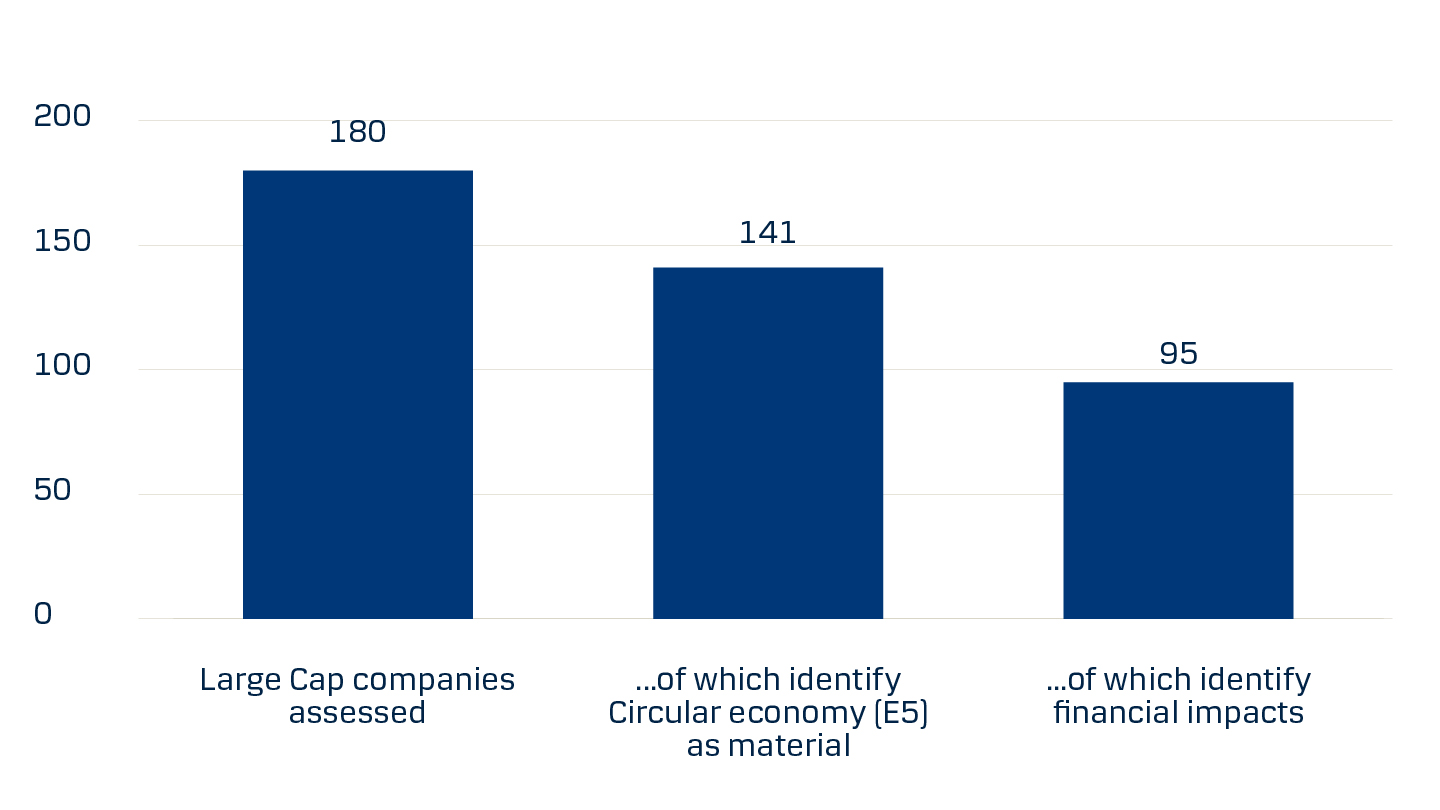
Our review of FY2025 CSRD disclosures from 180 Nordic large-cap companies found that 141 identify circularity as material, with 95 describing related financial risks or opportunities. Key risks include regulatory change, resource scarcity and supply-chain exposure, while opportunities range from cost efficiencies to new revenue streams and stronger market positioning.
New whitepaper explores the economics behind circularity
Our new white paper, Circularity, Competitiveness & Capital, looks at the economics behind circularity, with a particular focus on the capital perspective and what it takes to turn circular ambition into financially relevant evidence.
Around half of the companies see financial risks and / or opportunities
Our review of FY2025 CSRD disclosures from 180 Nordic large-cap companies found that 141 identify circularity as material, with 95 describing related financial risks or opportunities. Key risks include regulatory change, resource scarcity and supply-chain exposure, while opportunities range from cost efficiencies to new revenue streams and stronger market positioning.
Double materiality reporting
Financial impact reporting split
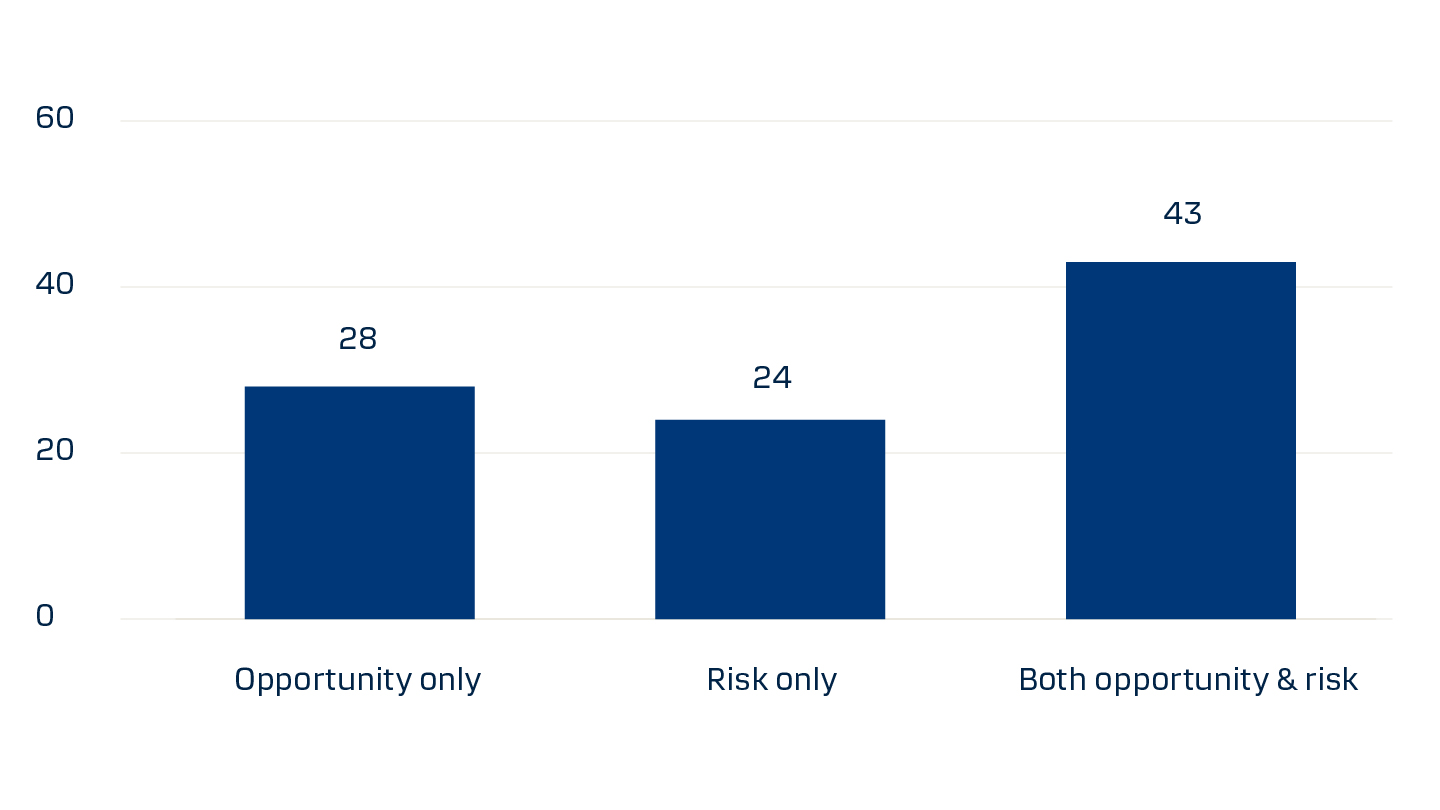
But identifying an opportunity is not the same as creating financial value. Repair, reuse and remanufacturing can preserve value and reduce resource-related risks, but circular business models may also require additional capital, infrastructure and new operating models.
New whitepaper explores the economics behind circularity
Our new white paper, Circularity, Competitiveness & Capital, looks at the economics behind circularity, with a particular focus on the capital perspective and what it takes to turn circular ambition into financially relevant evidence.
What does it take to turn circular business models into financially relevant evidence?
Find out more in our new Whitepaper 'Circularity, Competitiveness & Capital'.